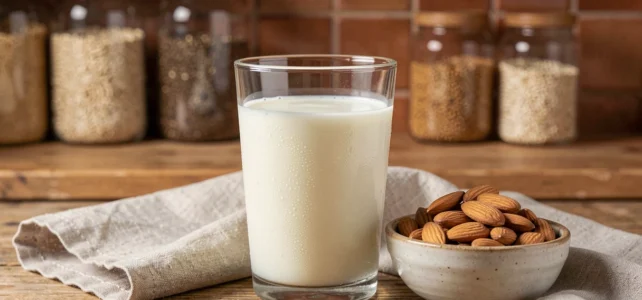
Comparing milks based on their protein content seems simple: all cow’s milk contains about 3.2 to 3.5 g of protein per 100 ml, whether whole, semi-skimmed, or skimmed. The real variable, the one that changes from product to product, is the nutritional matrix that accompanies these proteins, especially with the recent arrival of ultrafiltered concentrated milks that are changing the game.
Proteins by type of milk: comparative table of contents
The protein content of cow’s milk varies little depending on the level of skimming. What distinguishes the products is the amount of lipids, calories, and fat-soluble vitamins associated with these proteins.
| Type of milk (100 ml) | Proteins | Lipids | Calories | Calcium |
|---|---|---|---|---|
| Whole milk | 3.2 g | 3.3 g | 61 kcal | 113 mg |
| Semi-skimmed milk | 3.2 to 3.4 g | 1.5 to 1.8 g | 46 to 50 kcal | ~120 mg |
| Skimmed milk | 3.4 to 3.5 g | < 0.5 g | ~34 kcal | ~120 mg |
| Protein-enriched milk (ultrafiltered) | 7 to 10 g | variable | variable | variable |
Calcium and protein levels remain almost identical between whole, semi-skimmed, and skimmed milk. However, the lipid fraction of whole milk carries fat-soluble vitamins A and D, which decrease significantly with skimming.
To delve deeper into whole milk and its protein content, one must think beyond just the gram of protein per glass.

Whole milk and proteins: why lipids change absorption
Whole milk provides about 3.3 g of lipids per 100 ml, with a majority of saturated fats. This fatty matrix alters the kinetics of amino acid absorption.
Research published in Frontiers in Nutrition shows that the lipid matrix of whole dairy products slows gastric emptying. The peak of amino acids in the plasma is delayed compared to skimmed milk, but the total amount absorbed remains comparable.
For an athlete seeking a rapid influx of protein after training, skimmed milk or ultrafiltered milk will be more suitable. For someone who wants a prolonged feeling of satiety or needs fat-soluble vitamins, whole milk offers an advantage that the raw protein figure does not reflect.
Matrix effect: dairy fats are not free fats
Recent research from the University of Toronto suggests that the fats in whole milk, taken within their food matrix (fat globules surrounded by phospholipid membranes), do not produce the same metabolic effects as isolated saturated fats. Whole milk does not impair cardiovascular profile as was previously assumed in older recommendations.
This nuance challenges the idea of systematically preferring skimmed milk to protect heart health, a reflex still common in public nutritional guides.
Protein-enriched milks by ultrafiltration: the real breakthrough
The dairy aisle has changed. Supermarkets now offer ultrafiltered concentrated milks that reach 7 to 10 g of protein per 100 ml, without the addition of powder or caseinates. The process filters out some water and lactose, which naturally concentrates the proteins and calcium.
Unlike traditional whole milk, these products directly target consumers who want to increase their protein intake per glass. Three criteria allow for their evaluation against standard whole milk:
- The protein content per serving: a 200 ml glass of ultrafiltered milk provides as much protein as two glasses of traditional whole milk, reducing the total volume to consume.
- The amino acid profile: identical to regular milk (majority casein, minority whey), since the process does not alter the nature of the proteins.
- The cost per gram of protein: these milks are significantly more expensive per liter, but the extra cost is justified when compared to the gram of protein actually consumed.
For someone without a specific protein goal, traditional whole milk remains sufficient. Ultrafiltered milk is only of interest if protein intake is an explicit goal (sports, recovery, high-protein diet, nutrition for elderly individuals at risk of sarcopenia).

Whole milk for children and adults: guidelines by age
PNNS recommendations have evolved on a specific point. Before the age of three, whole milk is justified by the high lipid needs necessary for brain development. From four or five years old, official guidelines direct towards semi-skimmed milk.
For adults, the choice depends on the overall dietary context:
- If the rest of the diet is already high in saturated fats (cheeses, cold cuts, prepared dishes), semi-skimmed or skimmed milk limits excess lipids without sacrificing proteins or calcium.
- If the diet is low in fats or if the person has high caloric needs (growing teenagers, physical workers), whole milk provides a useful complement in energy and vitamins A and D.
- For lactose-intolerant individuals, the type of skimming does not change anything: the lactose content is identical between whole and skimmed milk. Only lactose-free milks or plant-based drinks solve this problem.
Goat milk and sheep milk: a comparable protein profile
Goat milk has a protein content close to that of cow’s milk. Sheep milk is slightly more concentrated in proteins and lipids. None of the three presents a decisive advantage in terms of protein alone. The choice between these milks is more about digestive tolerance and taste preferences.
Whole cow’s milk remains, due to its price and availability, the most accessible protein-calcium-cost ratio in France. Ultrafiltered milks are gaining ground for those with a specific protein goal, but for the majority of consumers, the difference between whole and semi-skimmed milk lies in lipids and fat-soluble vitamins, not proteins.