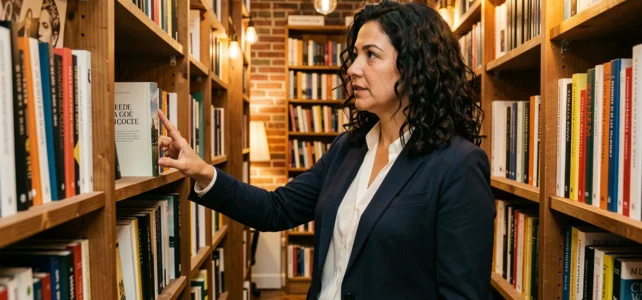
The French cultural season of September 2026 opens with a contrasting landscape. On one side, a literary production that remains abundant, festivals attracting crowds, and theater scenes that are fully booked. On the other, signs of structural tension in the book ecosystem, and a ministerial report highlighting new forms of pressure on creative freedom.
Creative Freedom in France: What the 2025 Report from the Ministry of Culture Reveals
The Ministry of Culture published its annual 2025 report on creative freedom in 2026. The document sheds light on a phenomenon that the cultural pages of major media rarely address: direct institutional pressures are gradually replacing external pressures.
Specifically, the reported infringements no longer primarily come from activist groups or online campaigns. They increasingly stem from institutional actors, local authorities, or public organizations that intervene in the programming or content of works. This shift alters the very nature of the debate on cultural censorship in France.
The available data do not allow for a conclusion about a global increase in cases, but the nature of the interventions has changed. Bookstores and libraries have suffered physical damage (burned books, broken windows), as documented by Actualitté in its recent investigations.
These incidents remain limited, but they illustrate a climate of tension that extends beyond the digital realm. Several specialized media covering the French literary scene, including lapetiterevue.fr, regularly relay these warning signals throughout their editorial coverage.

Literary Season 2026: Fewer Novels, More French Fiction
The count for the 2026 literary season, published by Livres Hebdo in June and reported by La Croix on August 13, confirms a trend: the total number of novels published this season is slightly declining. According to these sources, the decrease primarily comes from translated foreign novels. French production, on the other hand, remains stable.
This rebalancing is not trivial. It signals an editorial choice: French publishing houses are increasingly betting on national authors, in a context where translation costs and foreign rights weigh on margins. The result for the reader is a season more focused on hexagonal fiction.
Emerging Editorial Trends
Le Monde noted on August 19, 2026, several driving forces in the publications: a marked return of fiction, violence as a cross-cutting theme, and an editorial gesture described as unprecedented by the newspaper. France Culture, for its part, revealed its favorites among the titles of the season, with choices that confirm these trends.
- The family remains a structuring theme, addressed this year from less conventional angles (dysfunctions, secrets, broken lineages).
- Several debut novels stand out for their formal ambition, a sign that reading committees are taking risks on new voices.
- The investigative novel, straddling fiction and true crime, occupies a notable place, supported by authors like Philippe Jaenada.
France Inter has also published its ten favorites for the season, while Mediapart dedicates an entire file to the 2026 literary season. Thus, French literary news benefits from dense coverage, but field feedback diverges on one point: does this critical abundance translate into sales for less publicized authors?
Independent Bookstores in France: The Break of 2025
One piece of data that went relatively unnoticed in the flow of the season deserves attention. According to a study by the National Book Center published on June 4, 2026, 2025 was the first year where bookstore closures outnumbered openings in France.
This trend reversal is structural, not conjunctural. Ouest-France recently reported the words of a bookseller from Saint-Nazaire summarizing the situation: survival depends on transforming the store into a living space, with events, meetings, and workshops. The model of the bookstore as a simple point of sale for books is no longer sufficient.
Factors of Pressure on the Sector
Several dynamics combine to weaken the network:
- The number of publishers is increasing while the number of regular readers is decreasing, creating a documented scissor effect noted by Ouest-France.
- The competition from online commerce remains a permanent factor, despite the law on the fixed book price.
- Real estate costs in city centers make the economic equation difficult for independent structures.
The paradox is evident: the literary season remains a major media event, but the commercial fabric that allows books to reach readers is thinning. The figures from the CNL raise a question that the festival coverage of September tends to obscure.

Film, Festivals, and the French Cultural Scene at the Start of 2026
The American Film Festival of Deauville, for its 52nd edition, welcomes Ethan Hawke and Susan Sarandon as headliners. The event remains a necessary appointment on the cultural calendar of September, alongside the music and theater festivals that mark the season in the region.
French cinema is undergoing a period of renewal. The recent passing of filmmaker Tony Gatlif, director of Gadjo Dilo, at 77 years old, reminds us that a generation of creators who shaped French auteur cinema is gradually fading away. New voices sometimes struggle to find their audience in theaters, in a context of post-pandemic attendance that has not returned to previous levels.
On the music scene, the back-to-school tours and album releases are fueling the news, but the structuring of the sector is evolving. Summer festivals remain the main economic driver of live performance in the region, concentrating an increasing share of annual revenues for artists and producers.
The French culture of this 2026 season cannot be reduced to a catalog of releases and events. The tensions on creative freedom, the decline of the bookstore network, and editorial concentration sketch a landscape where artistic vitality coexists with real economic fragilities. The gap between the media buzz of September and the realities on the ground remains, at this stage, the most striking aspect of this season.