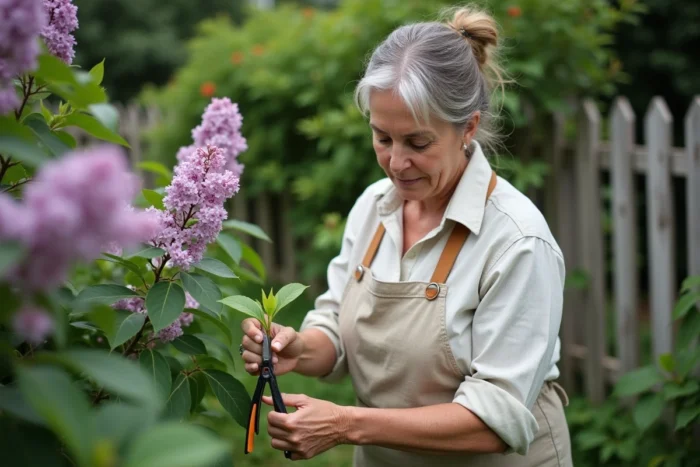
The lilac (Syringa vulgaris) is a shrub known to be difficult to propagate. Its slow rooting process discourages many gardeners, who resort to purchasing container plants or dividing suckers. However, cuttings remain a reliable method for faithfully reproducing a variety, provided the right collection technique is chosen and a schedule adapted to the local climate is followed.
Heel Cutting on Lilac: The Technique That Classic Guides Overlook
Most tutorials detail the classic herbaceous or semi-augmented cutting taken with pruning shears. On lilac, this approach yields random results because young wood struggles to produce adventitious roots.
The heel cutting changes the game. The principle: pull a lateral shoot downwards with a quick motion to retain a two-year-old wood fragment at its base. This junction area between the old wood and the current year’s shoot concentrates the cells most capable of producing roots. According to Jardino, this is the most reliable technique for this species precisely because it exploits the capacity of the old wood/young wood junction.
The action requires a bit of practice. Pulling too hard tears off a piece that is too long, which dries out. Pulling too gently leaves an insufficient heel. A good heel measures a few millimeters of clean old wood, without excessively torn bark. If the tear is too significant, shorten the heel with disinfected pruning shears without removing the entire old fragment.
Those who wish to delve deeper into how to easily propagate lilac will find useful additional information on collection variations, including the cross cutting.
Lilac Cutting Schedule According to Climate
The usual timeframe, repeated from article to article, places cuttings between April and June or between August and September. This schedule works in a temperate oceanic climate. It deserves serious adjustments as soon as frosts arrive early.
Regions with Early Winters
In mountainous areas, in the East, in Belgium, or in Quebec, favoring May-June rather than August-September gives the cutting several additional months to develop a root system before the first frosts. A cutting taken at the end of August in the Massif Central risks not having enough time to root sufficiently before November.
Jardino also recommends wintering young cuttings in a frost-free location during the first year. A bright garage, an unheated conservatory, or a cold frame will suffice. The goal is not to maintain warmth, but to prevent the substrate from freezing deeply and destroying the nascent roots.
Mild Climate: The August Window Remains Relevant
On the Atlantic coast or in the Mediterranean zone, semi-augmented cuttings from August-September work well. The wood of the year has begun to harden, and the stem combines vigor and resistance. The semi-augmented shoot often roots better than fully green wood, provided the substrate remains moist without being waterlogged.
Substrate and Rooting Conditions for Lilac Cuttings
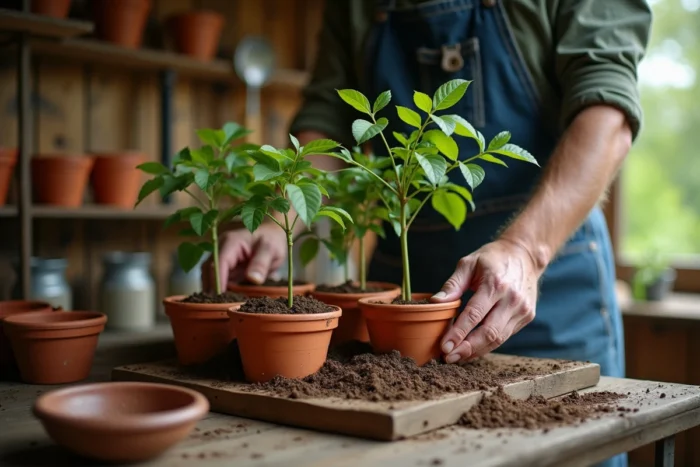
The choice of substrate directly influences success. Lilac hates excess stagnant moisture, which causes the heel to rot before any roots can emerge.
- An equal mix of coarse river sand and light potting soil ensures quick drainage while retaining enough moisture to prevent the tissues from drying out.
- Terracotta pots, being porous, regulate moisture better than plastic. They limit the risk of saturation after overly generous watering.
- Rooting hormone powder (auxin) applied to the heel stimulates root production. On lilac, which is slow to root by nature, this hormonal aid makes a noticeable difference.
- A light winter cover placed over the pots maintains a humid atmosphere without blocking air circulation, reducing the development of mold.
Place the cuttings in partial shade. Direct sunlight dries out the reduced leaves before the roots can compensate for transpiration. Keeping two to three leaves per stem, cut in half, limits evaporation while maintaining the photosynthesis necessary for the cutting’s survival.
Propagating a Lilac from a Cut Bouquet: Myth or Reality
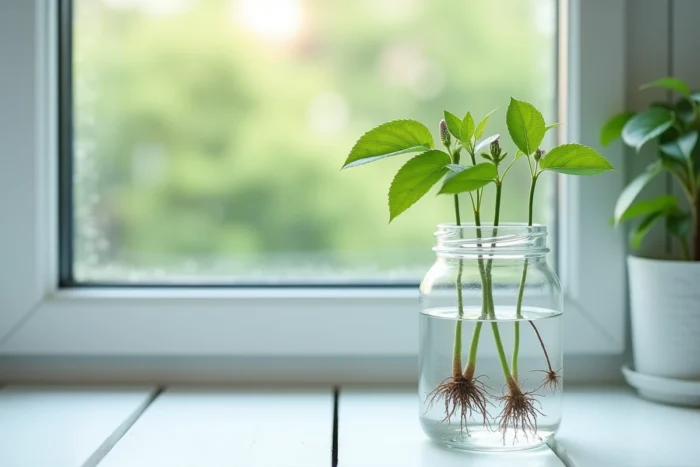
The question often arises: can one recover a lilac stem from a vase to root it? Field reports vary on this point.
Jamet Espaces Verts examined this case, and the answer is nuanced. Flower stems cut for several days have a very low survival rate, as the tissues begin to necrose in the vase water. The sap-conducting channels become blocked, which compromises root production.
In contrast, a stem taken the same day from a freshly cut bouquet, still turgid, has a better chance if treated immediately: recut the base at an angle, apply rooting hormone, and plant in a draining substrate. The result remains less reliable than a heel cutting taken directly from the shrub, but the attempt costs nothing.
Monitoring the First Weeks After Cutting
The first two months are critical. The cutting survives on its reserves, without functional roots. During this phase, keep the substrate slightly moist without ever saturating it. Mist watering rather than watering can reduce the risk of compacting the sand-soil mix around the heel.
The reliable sign of rooting is the appearance of new shoots in the axils of the retained leaves. Gently pulling on the stem to feel resistance is not always conclusive on lilac, as the first roots remain thin and fragile.
Once rooted, cuttings benefit from staying in pots for at least two complete seasons before being planted in the ground. This delay allows the root system to densify sufficiently to withstand the stress of transplantation and winter temperature variations.
Propagating lilac requires more patience than that of a rose or a hydrangea. The heel technique, a schedule adjusted to the local climate, and a well-drained substrate are the three concrete levers that shift the survival rate from random to satisfactory.