
A computing cluster brings together several interconnected servers that function as a single computing resource. This architecture, long confined to research laboratories and specialized data centers, has become essential in businesses to handle increasing workloads. However, the criteria that define a high-performing cluster have changed: raw power is no longer sufficient when requirements also include compliance, traceability, and data sovereignty.
Cluster and Compliance in 2026: What AI Requires from Enterprise Architectures
Deploying a server cluster to train an AI model or execute real-time inference is no longer just a technical choice. Companies that handle sensitive data (healthcare, finance, public sector) must now prove that their infrastructure complies with auditable security and governance standards.
According to an analysis published by OneSourceCloud in August 2026, clusters are evaluated from the perspective of operational compliance, with requirements for audit proof and fine traceability on each node. The security of Kubernetes clusters, for example, is treated as an ongoing governance issue rather than just a deployment step, according to VMware.
To delve deeper into the definition of a cluster in computing and understand the implementation steps, technical resources detail the network, hardware, and software prerequisites that condition the success of a clustering project.
This transformation turns the cluster into an object of compliance as much as performance. A poorly documented cluster, without centralized access logs or encryption policies per node, becomes a regulatory risk before it is a technical risk.
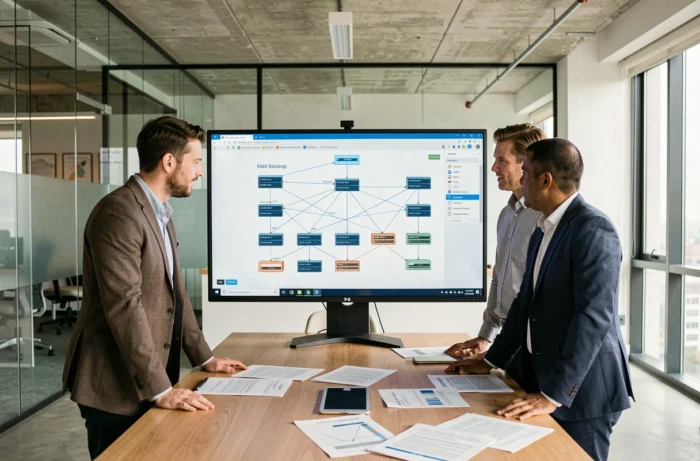
Comparison of Cluster Architectures Based on Enterprise Use Cases
Not all clusters meet the same needs. The choice between high availability, parallel computing, or container orchestration depends on the target workload and the desired level of control.
| Type of Cluster | Main Use Case | Distinct Advantage | Major Constraint |
|---|---|---|---|
| High Availability (HA) | Critical applications (ERP, transactional databases) | Automatic failover between backup nodes | Cost of hardware redundancy |
| HPC (High Performance Computing) | Scientific simulation, financial modeling | Parallel processing power across thousands of nodes | Energy consumption and cooling |
| Managed Kubernetes | Microservices, AI inference, continuous deployment | Automated orchestration, dynamic scaling | Complexity of multi-cluster governance |
| Data/Analytical Cluster | Data lakes, ETL pipelines, real-time analytics | Automated node maintenance | Dependency on cloud provider |
Managed Kubernetes clusters and data/analytical clusters share a common trend: automated maintenance is becoming a standard expectation in production environments, as highlighted by Microsoft Learn. Security updates, load balancing between nodes, and replacement of failing nodes occur without manual intervention in the most mature offerings.
What This Table Does Not Show
The boundary between these categories is blurring. A Kubernetes cluster can serve as both an HPC infrastructure for training models and a high availability foundation for inference APIs. The cluster is no longer “computing” or “servers” but an integrated orchestration component within managed offerings, according to analyses by Blue and Microsoft Learn published in August 2026.
Sovereignty and Latency: The Two Criteria Redefining Cluster Choice
The enterprise AI infrastructure market is pushing clusters towards a dual imperative that raw computing power alone does not resolve.
According to Astute Analytica, the use of clusters is shifting towards enterprise AI workloads with an increased demand for sovereignty and latency. Specifically, this means that European companies deploying language or computer vision models are seeking clusters hosted within national territory, with contractual guarantees on the physical location of nodes and data transit.
Latency, in turn, conditions the viability of real-time applications. A server cluster distributed between two remote data centers can offer geographic redundancy, but at the cost of response times incompatible with continuous inference. Architectures that prioritize node proximity within the same site gain on latency, but they lose resilience against localized incidents.
- Sovereignty requires verifying that each node of the cluster is hosted in a jurisdiction compatible with applicable regulations (GDPR, sector-specific regulations).
- Latency depends on the network topology between nodes: a co-located cluster in the same data center offers significantly lower inter-node communication times than a distributed cluster.
- The trade-off between geographic resilience and network performance must be arbitrated project by project, depending on the criticality of the application.
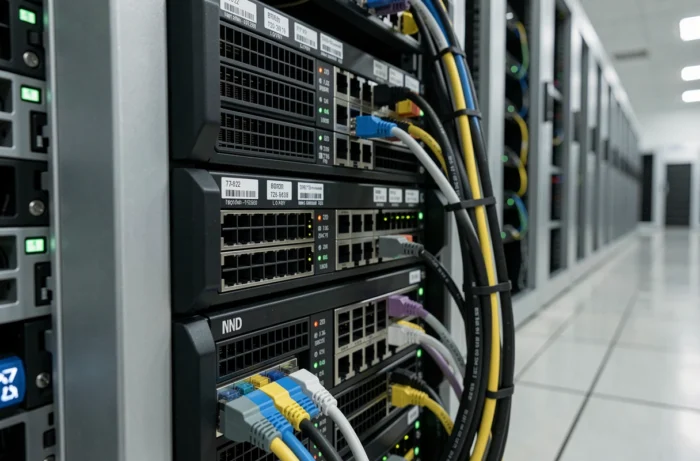
Kubernetes Cluster Governance: Audit, Security Policy, and Lifecycle
Kubernetes has established itself as the dominant orchestration system for containerized clusters. This massive adoption has a side effect: the attack surface of a poorly configured Kubernetes cluster is considerable.
VMware published a security policy bundle for the vSphere Kubernetes service in August 2026, designed to enforce compliance rules from the moment the cluster is created. The approach involves integrating security controls into the cluster’s lifecycle, not just during the annual audit.
Key points of vigilance include secret management (API keys, certificates), network isolation between namespaces, and traceability of administrative actions on each node. A cluster that does not log configuration changes of its nodes cannot satisfy a compliance audit, regardless of the standard (ISO 27001, SOC 2, sector-specific regulations).
Automation Does Not Mean Absence of Control
Managed cluster offerings automate the provisioning and updating of nodes. This automation reduces human errors, but it shifts responsibility to the initial configuration of policies. An automated cluster without a properly defined security policy propagates errors faster than a manually managed cluster.
Data storage within the cluster follows the same logic. Persistent volumes attached to nodes must be encrypted, replicated according to their criticality level, and their lifecycle must follow that of the applications they serve.
The evolution of clusters in enterprises follows a clear trajectory: computing power remains the foundation, but compliance, data sovereignty, and governed automation are the three dimensions that determine the viability of a clustering project for AI workloads. A high-performing cluster that does not pass a security audit no longer has a place in production.