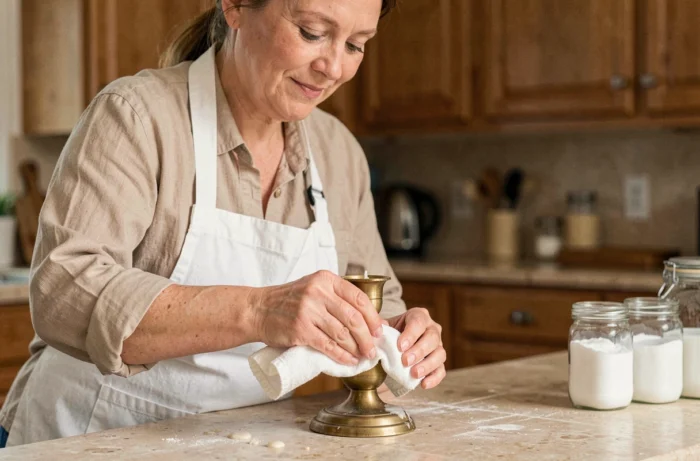
Your door handles have turned a dull brown, the living room candlestick has lost its golden shine, and guests are arriving in two hours. Making brass shine quickly doesn’t require specialized products or expensive equipment. A few ingredients already present in your kitchen are enough, provided you follow a preliminary step that most guides forget to mention.
Magnet Test Before Cleaning: The Check That Prevents Damage
Before rubbing anything, place a refrigerator magnet on the object. If the magnet sticks, you don’t have solid brass but a ferrous metal plated with brass. This distinction changes everything.
A plated metal cannot withstand acids (vinegar, lemon) or heavy polishing. These treatments penetrate the thin layer of brass and expose the ferrous metal underneath, creating permanent stains. On plated items, stick to a damp microfiber cloth with a drop of mild soap.
If the magnet doesn’t stick, you have genuine brass. You can proceed to the acidic methods described below. This few-second reflex protects both your door handles and your vintage decorative items, and you will find the ideas from decoenvogue.com to explore for further express maintenance.
Gold-Plated Brass or Gold-Plated: The Acid Cleaning Trap
Have you ever noticed discolored areas on a piece of jewelry or a table accessory after cleaning with vinegar? This is a sign that the gold layer has been removed.
Gold-plated or gold-finished brass does not tolerate any acid or abrasive, even mild ones. Toothpaste, baking soda, lemon: all these products attack the finish in a single application. The resulting discoloration is irreversible.
For these fragile pieces, the only safe method remains warm soapy water applied with a clean microfiber cloth. Dry immediately after rinsing to avoid water spots. If the item has lost its shine despite these precautions, a jeweler can reapply a gold layer, but no homemade recipe will restore it.
Express Cleaning of Solid Brass: Two Methods That Work in Under an Hour
Once confirmed that your item is indeed solid brass (negative magnet test, no gold plating), two approaches yield visible results quickly.
Soapy Water and Careful Drying for Slightly Tarnished Brass
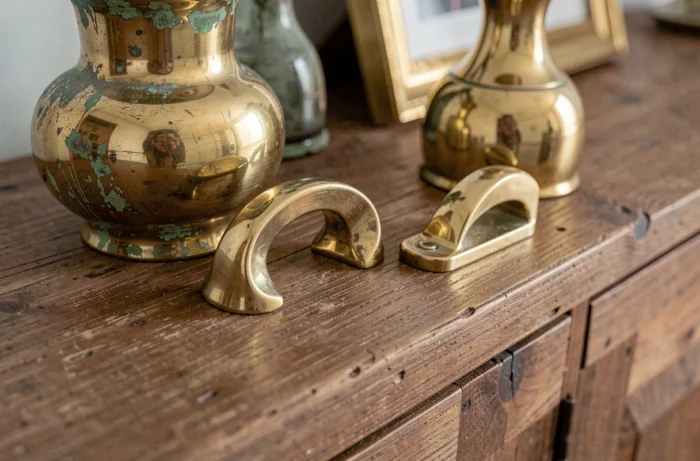
If the tarnishing is superficial (grayish haze without green spots), a wash with warm water and Marseille soap is sufficient. Rub with a soft sponge, rinse with clear water, then dry completely with a clean soft cloth. The drying step is the most important: any water left on the surface forms spots and accelerates oxidation.
White Vinegar and Coarse Salt for Oxidized Brass
When faced with greenish stains or marked blackening, the white vinegar and coarse salt mixture acts quickly. Apply the solution with a soft cloth in light circular motions.
A point of caution often overlooked: modern DZR brass reacts more strongly to acids than older brass. If your faucets or handles date from a recent installation, reduce the contact time to a few minutes and rinse thoroughly. Prolonged exposure may create pitting in the metal.
Here are the steps for a safe acidic cleaning:
- Apply the vinegar-salt mixture to a small, inconspicuous area first, wait two minutes, rinse, and check the surface condition before treating the whole item
- Work in palm-sized sections to control contact time and rinse progressively
- Rinse each area with clear water before moving to the next, then dry immediately with a microfiber cloth
Protecting the Shine of Brass Between Gatherings
Cleaning resolves the immediate issue. Protection slows down the return of tarnishing. Two simple actions are enough for your brass to maintain its shine longer.
A weekly wipe with a dry cloth removes greasy residues left by fingers. Contact with skin deposits sebum that accelerates oxidation, especially on door handles and kitchen faucets.
For decorative pieces that you don’t touch often (candelabras, frames, light fixtures), a thin layer of natural beeswax applied after cleaning creates a barrier against ambient moisture. The wax does not alter the appearance of the metal and is easily renewed every few months.
Avoid spray varnishes marketed as “brass protection.” They yellow over time and peel off in patches, resulting in a worse outcome than natural tarnishing.

Which Brass Objects to Prioritize When Time is Short
With an hour before guests arrive, cleaning everything is rarely realistic. Focus on what your guests will see and touch.
- The handles of the front and living room doors: first physical contact, tarnishing is immediately noticeable
- Table accessories (candelabras, trivets, napkin rings): they will be closely observed during the meal
- Guest bathroom faucets: a shiny faucet gives an overall impression of cleanliness to the entire room
Brass light fixtures can wait. Positioned high, their tarnishing goes unnoticed under dim lighting. Save them for a thorough maintenance session the following weekend.
Brass rewards regular care much more than intensive catch-up sessions. A quick wipe after each use delays the need for vinegar and salt, and your next guests will find a shining interior without you having to rush.