
A silicone seal that darkens around the shower tray, a front door that lets in a draft of cold air, a kitchen drawer that we no longer open because it overflows: we put off these micro-problems for months. Improving your home on a daily basis doesn’t require major renovation work, but rather targeted interventions on the points that generate the most friction. The goal is to address the concrete irritants, those that waste time or degrade comfort, before thinking about decoration.
Indoor air quality: the invisible project that changes comfort
We ventilate in the morning out of habit, but without measuring what is actually happening in the room. Since September 1, 2013, construction and decoration products intended for indoor use carry a label indicating emissions of volatile organic compounds (VOCs), rated from A+ to C. A C-rated particle board piece of furniture continues to emit formaldehyde for months after purchase.
When we find home tips on Sous Tous les Angles, ventilation often comes up as an underestimated lever. And for good reason: according to the HCSP and the decree of December 27, 2022, a CO₂ level below 800 ppm indicates satisfactory air renewal, while above 1,500 ppm, corrective actions are needed without delay.
Specifically, a CO₂ sensor placed in the living room or bedroom costs a few dozen euros and provides real-time readings. You quickly discover that the concentration rises at night in a closed bedroom, or after cooking in a poorly ventilated kitchen. Adjusting your ventilation habits then becomes a data-driven decision, not an intuition.
- Check the VOC label (A+ to C) before buying paint, glue, or new furniture.
- Install a CO₂ sensor in the most occupied rooms to detect concentration peaks.
- Clean or replace VMC filters at least once a year, as a clogged filter significantly reduces airflow.
- Avoid scented candles and incense in poorly ventilated rooms: they emit benzene and fine particles.
Zone-based organization: reduce clutter without reorganizing everything
Most guides suggest decluttering the entire house in a weekend. In practice, we last two hours before giving up. The approach that works is to tackle one friction zone per week, the one that generates the most visible clutter.
We start with the entrance. This is where shoes, keys, mail, and bags accumulate. A closed low cabinet with a top surface for holding small items is enough to contain the chaos. No need for a custom setup: a bench with integrated storage serves the purpose.
The catch-all drawer in the kitchen
Every kitchen has one. It’s where we cram in rubber bands, batteries, screwdrivers, corks, and manuals. The solution is not to empty it completely but to place rigid dividers inside. Three compartments are sufficient: common tools, small electrical equipment, and a free space that serves as a buffer.
An object that doesn’t have an assigned place always ends up lying around. This principle works in all rooms: each category of objects has a defined, even approximate, location. You don’t organize better by buying more boxes, but by reducing the number of objects without a designated spot.
Minor maintenance tasks: interventions that prevent major renovations
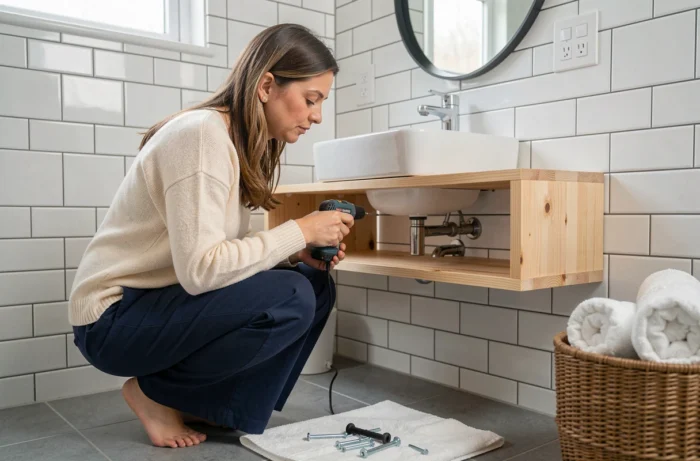
A cracked tile joint in the bathroom is barely noticeable. Six months later, moisture has infiltrated the substrate, and the renovation costs ten times more. Preventive micro-repairs are the best investment for a home.
Three points deserve regular attention:
- Silicone joints (shower, bathtub, sink): to be inspected every six months. A joint that is peeling or darkening can be replaced in less than an hour with a caulking gun and anti-mold silicone.
- Door and window hardware: a squeaky hinge or a misaligned pivot accelerates wear on the frame. A drop of oil or a recalibration takes five minutes.
- Ventilation grilles: when clogged, they lose efficiency and increase ambient humidity. A cleaning with soapy water twice a year is sufficient.
You don’t need to be handy for these interventions. A basic kit (screwdriver, silicone gun, Allen key, lubricant) covers most cases. Feedback varies on the ideal inspection frequency, but checking every three to six months in each wet room prevents most damage.
VOC labels and renovation materials: read before you buy
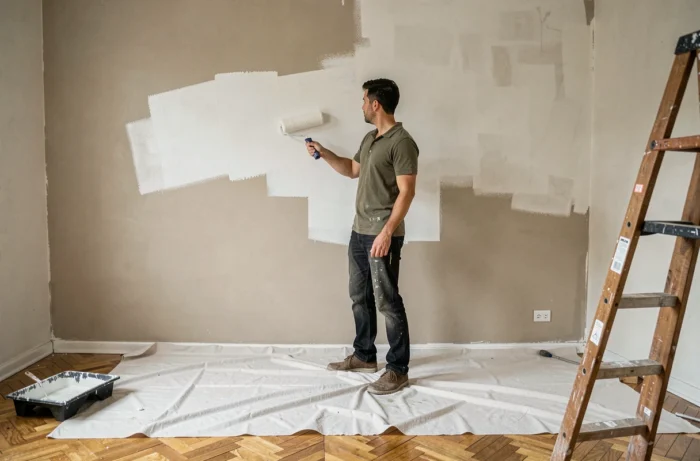
When planning refreshment work (painting, flooring, changing furniture), the classic reflex is to compare prices. Health criteria take a back seat, even though they have a direct impact on daily life.
The VOC emissions label, mandatory on construction and interior decoration products, rates emissions from A+ (very low) to C (high). Consistently choosing A+ rated products limits exposure to formaldehyde and benzene in the weeks following the work. This is not a marketing label: it is a regulatory requirement backed by testing measures.
Paint, glue, flooring: the areas to monitor
Acrylic water-based paints rated A+ emit significantly fewer VOCs than oil-based paints. The same rating applies to parquet or flooring adhesives. A cheap laminate floor rated B can release volatile compounds for several months in a living space.
Enhanced ventilation during and after work remains necessary, but it does not compensate for poor material choices. We address the problem at the source by reading the label before purchase, not by opening windows afterward.
Improving your home on a daily basis relies on precise actions rather than grand principles. Measuring air quality with a sensor, addressing a joint before it fails, checking a VOC label before buying a can of paint: these unremarkable actions protect comfort and the value of the property much more effectively than a complete reorganization launched on a motivated Sunday.