Renovating or redecorating a home is not just about choosing a paint color. Behind every home renovation project, there is an order to follow, materials to decide on, and a budget that can spiral out of control if certain steps are overlooked. This article details the concrete points that make the difference between a well-managed site and a project that gets bogged down.
Energy audit and regulations: what changes before starting your work
Before touching any wall, check the energy status of your home. Since 2025, the regulatory energy audit applies to homes classified as E during a sale, after having affected classes F and G. This is not just an administrative detail: it is a document that directly guides your work priorities.
Are you considering changing your windows or insulating the attic separately? MaPrimeRénov’ has refocused on large-scale renovations since September 2026. Several isolated works are no longer eligible for aid. Specifically, simply replacing a boiler without a comprehensive renovation package no longer qualifies for the same funding as before.
This regulatory shift changes the hierarchy of priorities for individuals. Rather than thinking gesture by gesture, it becomes more cost-effective to design a global project (insulation, ventilation, heating) and to enlist a France Rénov’ advisor to structure the file. This approach also allows for mobilizing more substantial aid through Anah.
On the ground, construction artisans report prolonged activity declines and increasing cash flow difficulties. This means that the availability of qualified professionals can paradoxically work in your favor for negotiating deadlines, provided you prepare a solid file in advance.
Order of interior renovation work: the sequence that avoids rework
Have you ever noticed plaster marks on a brand new floor after a project? This is the classic symptom of poorly planned work order. Following a logical sequence helps avoid doing the same thing twice, and especially helps keep the budget in check.
To explore the solutions from bricodeco-home.fr on this topic, you must first understand the basic principle: we always work from structural work to finishes.
- Demolition and structural work first: tearing down a wall, opening a kitchen to the living room, or replacing a floor should be done before any fine intervention. This is the messiest phase, generating the most dust and debris.
- Technical networks next: electricity, plumbing, ventilation. These installations are embedded in the walls and floors. Modifying them after laying tiles or decorative plaster requires breaking everything.
- Insulation and partitioning: once the networks are in place, the walls are closed up. Interior insulation is installed at this stage, before wall finishes.
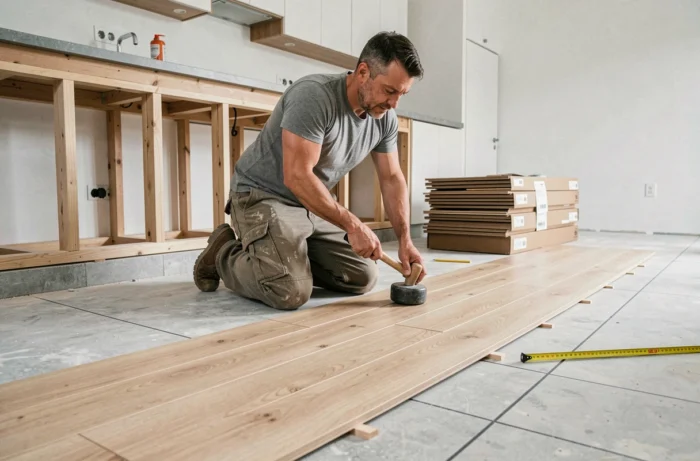
- Floor coverings, then walls, then ceilings: the floor is usually laid before wall painting (except for solid wood flooring, which some artisans prefer to protect and install last).
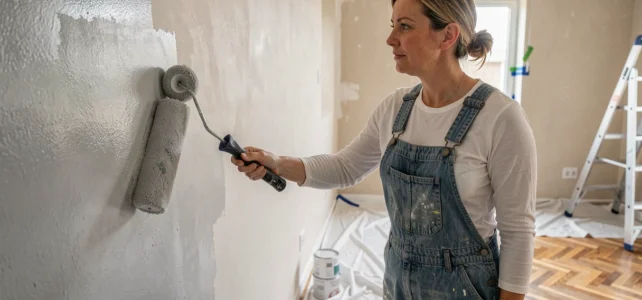
- Finishes and decoration: painting, wallpapering, installing baseboards, and setting up lighting and furniture.
Each step protects the previous one. Reversing two phases exposes you to additional costs sometimes equivalent to the initial item.
Home renovation budget: balancing materials and labor
The most common reflex is to cut back on materials to keep the budget in check. This is often a miscalculation in the medium term. Cheap tiles laid in a high-traffic area (kitchen, entrance) can scratch or crack within a few years. The replacement then costs more than the initial extra cost of a more durable material.
Why does this choice deserve reflection? Because labor represents the largest portion of a renovation project. On an average apartment project, the price difference between standard tiles and high-quality porcelain stoneware remains modest compared to the cost of installation itself.
Three areas deserve a higher material investment:
- Floor coverings in high-traffic areas: kitchen, entrance, hallway. Full-body porcelain stoneware or rigid vinyl (SPC) withstand shocks better than the lowest-priced options.
- Bathroom and kitchen fixtures: a quality mixer lasts a decade without leaking. An entry-level model may fail within two years.
- Interior paints: a covering paint in two coats is cheaper than a low-end paint that requires three or four, including labor time.
Meanwhile, some tasks lend themselves well to DIY if you have a minimum of practice: painting, wallpapering, and small decoration tasks are accessible without a professional. Reserve the professional budget for technical items (electricity, plumbing, custom carpentry).

Home decoration: sustainable choices that won’t go out of style in two seasons
Decor trends change quickly. Raw wood and terracotta colors dominate for a while, then give way to something else. Relying solely on the current trend for structural elements (kitchen, bathroom, flooring) means planning for another renovation in five years.
For decorating a living space, distinguish between fixed elements and movable elements. Furniture, textiles, and accessories follow trends; coverings and woodwork remain neutral. A light oak floor or medium gray tiles can withstand trends without issue. Color accents come from cushions, curtains, lighting, or frames, which are easily replaceable.
The “drenching” technique, which involves applying the same shade to the walls, ceilings, and woodwork of a room, is gaining ground among professional decorators. The effect is striking in a bedroom or office but requires careful execution: any surface irregularity is more noticeable when everything is monochrome.
One last often-overlooked point: lighting. Changing the fixtures in a room transforms the atmosphere as much as a coat of paint, for a much lower budget. Three light sources per room are sufficient (ceiling light, accent lamp, indirect lighting) to create depth without overcrowding the space.
The most successful renovation is one where every euro spent serves a specific purpose: thermal comfort, durability of materials, or daily visual pleasure. Public aid evolves, decor trends pass, but a well-sequenced project with properly chosen materials remains functional for years.