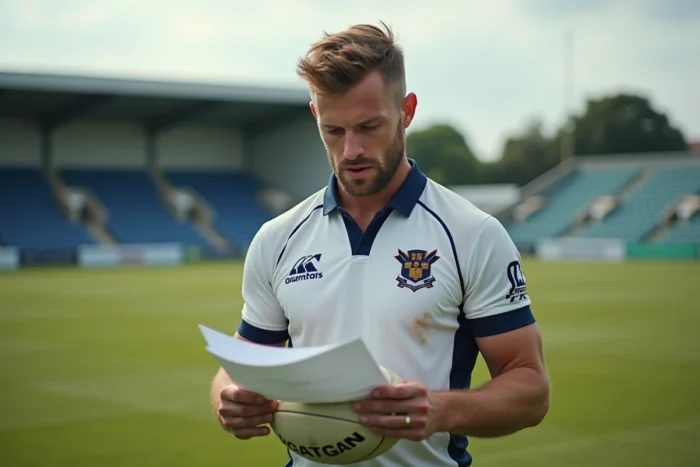
The National 2 rugby enters a period where player movements weigh as heavily as the sporting results of the past season. With the FFR competition reform planned for 2027-2028 and the announcement of an expanded National league, each club in the French fourth division is adjusting its recruitment to avoid ending up on the wrong side of the upcoming reshuffle. What profiles are circulating, which clubs are accumulating arrivals, and which positions are concentrating summer transfer activity?
Strategic Positions Targeted by National 2 Clubs During the Transfer Window
The transfer lists published club by club reveal a marked imbalance between the lines. The front row (props and hookers) and back rows represent a disproportionate share of arrivals compared to the center or fullback positions.
This tendency towards the forwards has a direct explanation: at this level of competition, the set pieces (scrums, mauls, rucks) determine the majority of results. A club that loses its starting tighthead prop without replacing them with an equivalent-level profile will feel the consequences throughout the season.
| Position | Transfer Trend 2026 | Frequent Sources |
|---|---|---|
| Prop | High demand, priority recruitments | Pro D2, National |
| Back Row | Regular flow, versatile profiles sought | National, National 2 |
| Scrum Half | Targeted movements, low volume | Pro D2, National |
| Wing | Many rotations, lower retention | National 2, Federal 1 |
Anglet illustrates this logic with arrivals concentrated in the front row and the pack (Imatte, prop from Limoges; Lascube, hooker from Narbonne; D’Alessandro, lock from Biarritz). At the same time, recruitment extends to half-backs to secure the playmaking (Gouaux from Vannes, Tredjeu from Bayonne).
Observing player transfers in National 2 rugby allows us to gauge how some clubs build an almost entirely new pack from one season to the next, while others bet on stability.
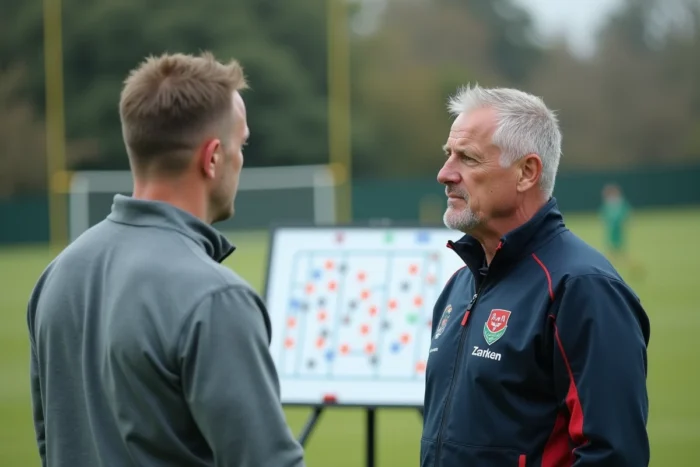
National 2 Clubs Recruiting from Pro D2 and National: A Signal of Ambition
Not all clubs recruit from the same pool. The origin of players serves as a reliable indicator of the ambitions displayed for the upcoming season.
Drancy-Saint-Denis has attracted players from Chartres, Massy, and Grenoble, which are clubs currently or previously competing in National and Pro D2. This type of recruitment reflects a desire to gain strength, not just to maintain status. Aubenas, on the other hand, combines arrivals from Rumilly, Annonay, and Suresnes, with a more regional profile.
- “Vertical” recruitment (players moving down from higher divisions): often associated with clubs aiming for promotion, capable of offering attractive conditions despite the amateur framework
- “Horizontal” recruitment (exchanges between National 2 or Federal 1 clubs): characteristic of clubs in a consolidation phase, seeking profiles that are immediately operational in a similar context
- “Descending” recruitment (players from Pro training centers who did not secure contracts): a growing talent pool, particularly among back rows and scrum halves trained in Top 14 academies
In contrast, departures to higher levels remain rare but significant. A club that loses two or three key players to the National without replacing them with equivalent profiles exposes itself to immediate sporting decline.
FFR Reform 2027-2028 and Its Impact on Recruitment Strategies Starting in 2026
The 2026-2027 season has been dubbed the largest reshuffle season in the history of FFR competitions. The transition to a sixteen-team National and the restructuring of the underlying divisions create a shockwave that reaches the current National 2 transfer window.
Clubs aiming for promotion to the National are no longer recruiting to win in National 2: they are recruiting to survive in the expanded National. This shift in perspective changes the very nature of the profiles sought.
Anticipating the Expanded National Rather Than Managing the Present
A club like Anglet, which is aligning around ten targeted arrivals in key positions, is not just preparing for the current season. The recruitment anticipates the physical and tactical density of a sixteen-team National, where matches will be more frequent and squad rotations crucial.
This anticipation drives some clubs to overload their rosters in the front row and back row to absorb injuries over an extended season. Clubs that do not anticipate this shift risk having a squad tailored for National 2 but insufficient to keep pace above.
FFR Transfer Periods and Their Administrative Impact
The transfer calendar set by the FFR structures these movements. The so-called “authorized” period ends in December, followed by a more restricted window. Clubs that do not finalize their recruitment before this date must deal with heavier procedures, which mechanically advantages the best-organized administrative structures.
Clubs with a robust administrative staff finalize their transfers earlier and secure the best available profiles. Smaller structures, often run by volunteers, find themselves in direct competition with semi-professional organizations in a market where responsiveness makes the difference.
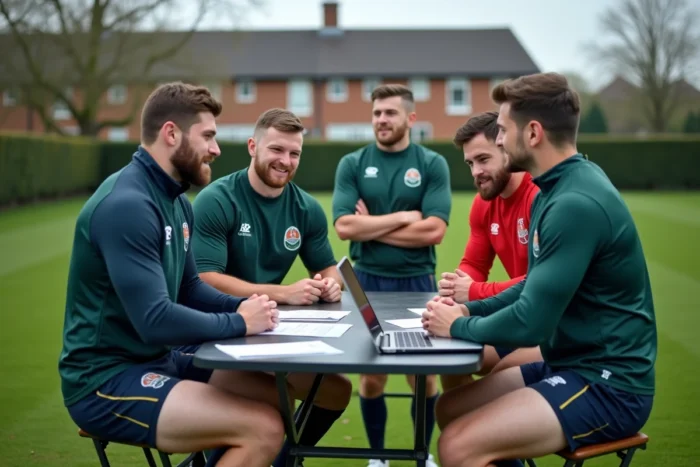
Increase in Licensed Players and Regional Pools in National 2 Rugby
The recruitment dynamic is not limited to transfers between existing clubs. Some regions are showing a continuous increase in the number of licensed players, which feeds a local pool that National 2 clubs are increasingly tapping into.
Brittany, for example, is experiencing steady growth in its rugby numbers. This type of regional reservoir allows local clubs to limit their dependence on long-distance transfers and to retain players trained in the same geographical area.
This trend could alter the balance between “buying” clubs (which recruit heavily from outside) and “training” clubs (which rely on their academy and regional league). In the long run, clubs capable of combining targeted external recruitment with local production will have a structural advantage that mere transfers cannot compensate for.
The National 2 transfer window for the 2026-2027 season no longer resembles a simple game of musical chairs between neighboring clubs. Player movements already reflect the power dynamics of the future expanded National, and clubs that understand this are recruiting a season ahead.