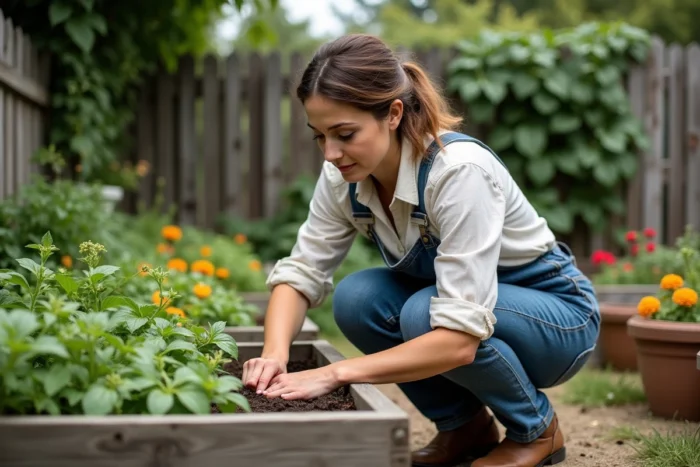
Between mulching, composting, crop rotation, and water management, an ecological vegetable garden employs techniques whose effectiveness varies according to soil, local climate, and available space. Comparing these practices in terms of their actual impact on fertility and water consumption allows for prioritizing efforts to create a productive garden without chemical inputs.
Differentiated management in the vegetable garden: a method from public green spaces
Communities and training organizations have been applying differentiated management in public parks and gardens for several years. The principle is to not maintain each area in the same way: some plots are mowed regularly, others are left as flowering meadows, and still others are covered with thick mulch without intervention.
When applied to the family vegetable garden, this approach changes the maintenance logic. Instead of uniformly weeding, we define uncultivated strips that serve as refuges for beneficial organisms (ground beetles, rove beetles, hoverflies). These buffer zones reduce pest pressure on neighboring crops without any treatment.
Operational recommendations include reducing mowed areas, creating micro-habitats (wood piles, stones, low hedges), and alternating between productive zones and areas for biological rest. To delve deeper into these techniques and find resources suitable for each type of garden, a useful reference is: https://www.lejardineur.net/.
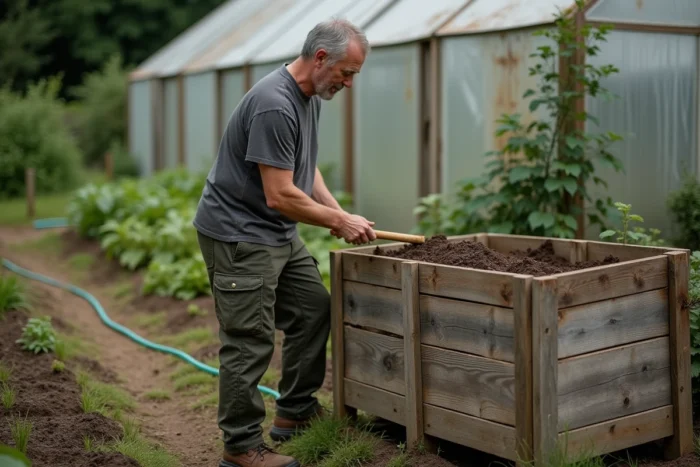
Mulching, surface composting, and green manures: comparative table of fertility techniques
Three techniques dominate the ecological management of soil fertility in the vegetable garden. Their effects on soil structure, water retention, and nutrient supply differ significantly.
| Technique | Effect on soil | Water retention | Nutrient supply | Main constraint |
|---|---|---|---|---|
| Organic mulching (straw, wood chips, dead leaves) | Protects the surface, limits erosion, promotes microbial life | High (limits evaporation) | Slow (gradual decomposition) | May harbor slugs in humid climates |
| Surface composting | Directly nourishes the top layer, stimulates earthworms | Medium (partial coverage) | Fast (direct contact organic matter/soil) | Sometimes attracts rodents if waste is poorly calibrated |
| Green manures (phacelia, mustard, clover) | Loosens soil deeply, fixes nitrogen (legumes) | Medium to high depending on cover | Variable depending on species (nitrogen for legumes, biomass for crucifers) | Occupies the plot for several weeks |
Surface composting provides nutrients more quickly than mulching, because organic waste is in direct contact with the soil and decomposed by worms and bacteria without an intermediate step. In contrast, mulching excels at water retention, a criterion that is becoming increasingly important with prolonged heat episodes.
Green manures occupy a special place: they work the soil deeply through their roots. Phacelia, for example, loosens heavy soils while attracting pollinators. Their limitation is the time they occupy the plot, which requires rigorous planning of rotations.
Plant associations and crop rotation: reducing pests without treatment
Associating certain plants in the vegetable garden is not folklore. Aromatic plants like lavender, thyme, and sage provide measurable protection to neighboring crops by disrupting pest insects with their volatile compounds.
Varying the plants grown each year breaks the development cycle of pests. The goal is to wait several years before replanting the same botanical family in the same location. Nightshades (tomatoes, peppers, eggplants) are particularly sensitive to this point: replanting them in the same spot two years in a row encourages the accumulation of pathogens in the soil.
- Alternate leafy vegetables (lettuces, spinach) and fruiting vegetables (tomatoes, zucchinis) in the same plot from year to year to balance nitrogen uptake
- Intercrop legumes (beans, peas) in the rotation to restore nitrogen to the soil through symbiotic fixation
- Place aromatic plants at the edge of the bed rather than at the end of the row to maximize the diffusion of their volatile compounds towards the central crops
Avoiding overcrowding in plantings also plays a direct role. Adequate spacing between plants allows light to penetrate and reduces moisture stagnation after rain, which limits the development of fungal diseases such as downy mildew or powdery mildew.
Case of carrots: a concrete association that works
Sowing radishes at the same time as carrots is a little-known market gardening technique not often highlighted in general guides. Radishes germinate quickly, mark the row, and loosen the soil at the surface. When harvested, carrots have aerated soil and clear space to grow.
Saving water in the ecological vegetable garden: water less but at the right time
Watering in the evening or early morning significantly reduces evaporation losses compared to watering in the middle of the day. This simple principle is often overlooked.
Mulching, already mentioned for fertility, accumulates a second benefit here: a layer of several centimeters of straw or dead leaves keeps the soil cool and decreases the frequency of watering needed. Heat waves, which have become a recurring theme in public gardening meetings, make this practice even more relevant.
- Mulch on already moist soil (after rain or watering) to trap water in the top centimeters
- Prefer watering at the base rather than by spraying to limit foliar diseases and waste
- Collect rainwater via a collector on the gutter, a solution that reduces dependence on the network without heavy investment
A living soil retains water better than bare, compacted soil. The fertility techniques described above (composting, green manures, mulching) therefore directly contribute to the water autonomy of the vegetable garden. A soil rich in organic matter behaves like a sponge, whereas bare worked soil allows water to run off the surface.
Water management and soil fertility management are not two separate subjects. Every centimeter of organic matter added to the surface simultaneously improves plant nutrition and the soil’s ability to store moisture, simplifying the overall maintenance of the ecological vegetable garden in the long term.