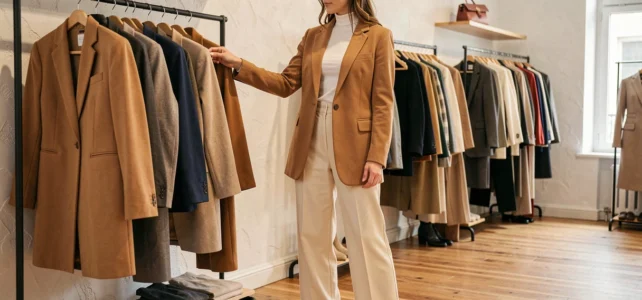
The fashion trends for the autumn-winter 2026-2027 season are not just about a color palette or a list of items to buy. Behind the silhouettes presented on the runways, a European regulatory framework is reshaping how collections are designed, produced, and sold. What are the concrete signals that distinguish this season from previous ones, and how do these changes affect what arrives in stores?
ESPR Regulation and the End of Unsold Goods Destruction: What Changes for Collections
Since July 19, 2026, major fashion companies operating in the European Union are no longer allowed to destroy unsold clothing and shoes. This ban stems from the Ecodesign for Sustainable Products (ESPR) regulation.
Brands must now document what happens to their surplus and prioritize reuse, repair, recycling, or donation. The impact on collections is direct: drops become more limited, permanent lines gain ground, and stock management now determines the number of references put on sale each season.
To follow fashion trends on Valimero Fashion Addict, one must integrate this fact: the relative scarcity of seasonal pieces is no longer just a marketing argument, it is a regulatory constraint.
The Digital Product Passport, whose European registry was activated in July 2026, complements this system. Each garment will eventually be traceable from its raw material to its end of life. Brands that adopt this system early are already modifying their labeling and product communication.
Colors and Materials Autumn-Winter 2026: Runway Trend Table
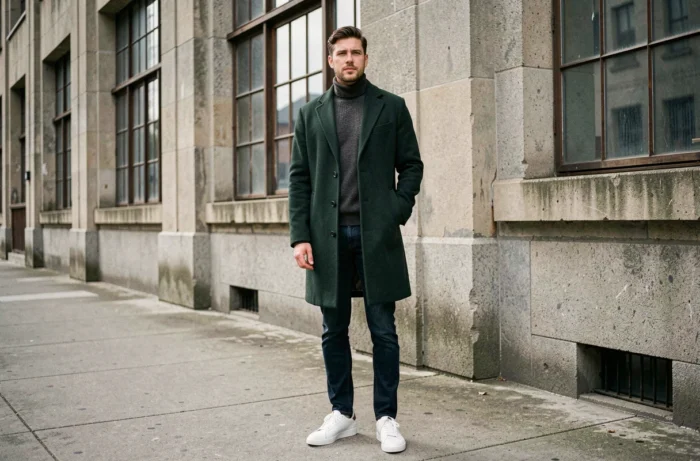
The autumn-winter 2026-2027 shows highlighted color directions and material choices that contrast with previous seasons. The table below summarizes the most visible directions on the runways.
| Trend | Colors / Materials | Types of Items Concerned |
|---|---|---|
| Total Black (black card) | Deep black, leather, felted wool | Coats, tailored sets, long dresses |
| Floral Prints (flower power) | Botanical patterns on dark backgrounds | Dresses, blouses, midi skirts |
| Voluminous Textures (fluffy effect) | Faux fur, thick knit, sherpa | Jackets, scarves, accessories |
| Rainbow Palette | Cobalt blue, tomato red, powdery yellow | Statement pieces, sweaters, trousers |
| Working Girl Silhouette | Cool wool, gabardine, structured cotton | Blazers, straight trousers, shirts |
Black dominates in volume, but saturated colors (cobalt, tomato red) serve as a counterpoint on standalone pieces. In contrast, off-white, which was very present in spring-summer, is significantly receding in winter wardrobes.
Recycled Materials and Permanent Lines
The ESPR constraint is pushing several brands to integrate more recycled materials into their permanent collections. Blended wools and recycled polyesters are gaining ground in basics (sweaters, trousers, jackets), while seasonal pieces concentrate noble materials in smaller quantities.
Key Pieces of the Season: What Wardrobes Really Retain
Rather than an exhaustive list, three categories of clothing concentrate the most significant developments this season.
- The structured blazer returns with more pronounced shoulders and slightly oversized cuts, often offered in cool wool or gabardine. It is the most versatile piece in the autumn 2026 wardrobe.
- The barrel jean (rounded cut at the thighs, tapered at the ankle) establishes itself as an alternative to the classic straight jean. Its distinctive silhouette makes it identifiable, which explains its presence in the majority of seasonal selections.
- Voluminous textures (faux fur, sherpa knit) transition from accessories to main pieces: short jackets, sleeveless vests, mid-length coats.
These three axes reflect a wardrobe that focuses on structure and volume rather than fluidity. Long dresses and midi skirts remain present, but they are now paired with more substantial outerwear.
Style and Colors: Balancing Seasonal Trend and Sustainable Wardrobe
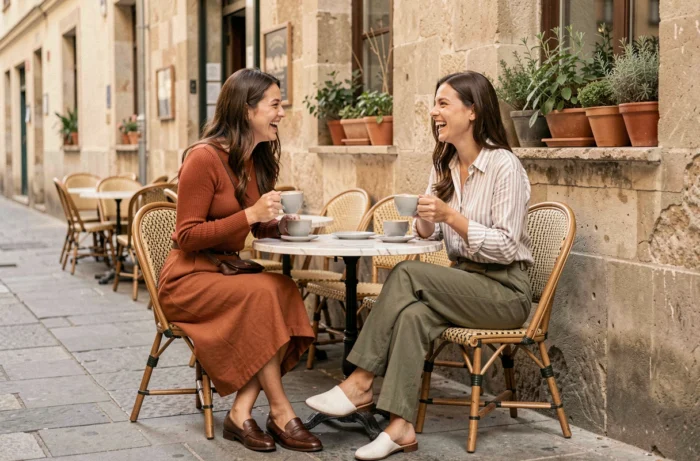
One of the concrete effects of reducing seasonal collections is a refocus on pieces that transcend multiple seasons. Total black, the structured blazer, and the barrel jean share a common point: they are not tied to a single season.
Bright colors (cobalt, tomato red, powdery yellow) function differently. They make a statement but age more quickly in perception. Adopting one or two colorful pieces per season, paired with a base of neutral clothing, remains the most coherent strategy with the logic of a sustainable wardrobe that is gradually taking hold.
Floral Prints: Fashion Effect or Established Trend
Botanical patterns on dark backgrounds have returned every autumn for several seasons. Their persistence suggests that they function more as a seasonal classic than as a fleeting trend. A floral print on a black background can be worn as well in October as in March, which distinguishes it from more pronounced patterns (zebra, giant polka dots) whose lifespan in the wardrobe is shorter.
The autumn-winter 2026-2027 season is distinguished less by its silhouettes, which are ultimately quite readable, than by the context in which they arrive. The ban on destroying unsold goods and the rollout of the digital product passport change the quantity and traceability of what is offered in stores. The fashion trends of this season are as much about what we buy as about how these clothes are produced and tracked.