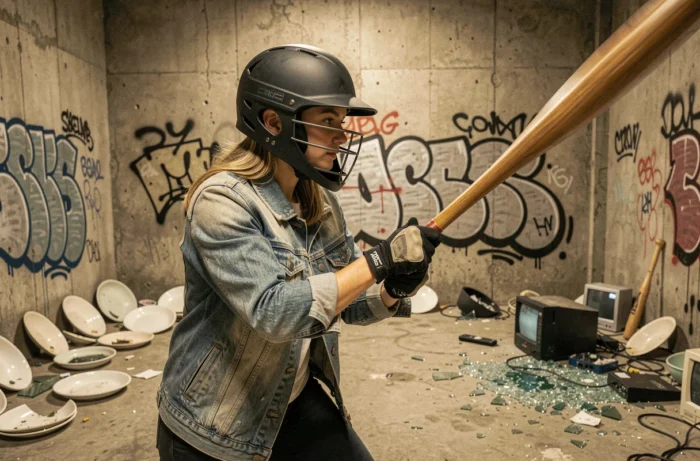
Smash rooms, known as fury rooms or rage rooms, have established themselves in the Lyon landscape as a full-fledged stress-relief activity. The concept is based on a simple principle: enter a room equipped with various objects (dishes, bottles, broken electronic devices) and destroy them using bats, hammers, or crowbars, all in a secure environment. Lyon has several establishments of this type, each with its own packages and approach to the experience.
Ventilation and safety in smash rooms: what changes the quality of a session
Most content about fury rooms in Lyon focuses on the atmosphere or pricing. One aspect that is rarely addressed concerns the sanitary conditions inside the room during the smashing.
When breaking glass, plastic, or painted objects, the session generates fine dust from glass, plastic, and paint. During long sessions, the air in the room becomes laden with particles. The most rigorous establishments now incorporate dedicated mechanical ventilation and provide a dust mask in addition to the helmet and gloves.
This ventilation criterion is a distinguishing factor between rage rooms. A well-ventilated room allows for prolonged effort without respiratory discomfort, while a poorly ventilated space forces a shorter session or inhalation of residues. Before booking, checking whether the establishment mentions its air extraction system or the provision of masks gives a reliable indication of the seriousness of the operation.
Several feedbacks confirm that this issue, which may seem like a detail, can significantly impact the quality of the session. To learn more about the packages offered in the metropolis, practical details are documented by fury room 44 on Coolgame, which lists the available options.
Actual smashing time in a fury room in Lyon: what to expect
One point that booking sites do not always highlight: the actual smashing time is significantly less than the advertised duration. A session is broken down into several distinct phases.
- Welcome and safety briefing: the team explains the rules, gestures to avoid, and how the room operates
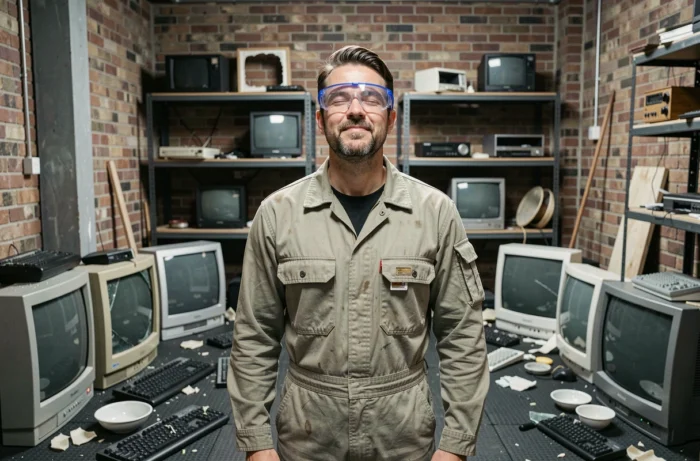
- Equipment: putting on the helmet, gloves, protective suit, and, in some cases, the dust mask
- Actual smashing phase: the moment when you destroy the objects provided
- Cool down and de-equipping: recovery, removal of equipment, possible debriefing
The briefing and equipment can take up up to a quarter of the reserved time slot. In practice, the actual time spent smashing objects represents about half to two-thirds of the total session duration. For a package displaying a given time slot, it is better to expect a significantly shorter active phase.
This information changes the way to evaluate the packages. Comparing two offers solely based on the advertised duration makes little sense if one includes a longer briefing or more comprehensive equipment. The relevant question to ask before booking is about the guaranteed smashing time, not the total duration of the time slot.
Objects to smash and supply: the logistics behind stress relief
The interview with Maxime, co-founder of Lyon Breaking Room, sheds light on a less visible aspect: the origin of the objects. Rage rooms operate with reclaimed materials. Dishes, bottles, small appliances, and screens generally come from donations, stock clearances, or partnerships with local businesses that are parting with obsolete equipment.
This supply chain has a direct consequence on the experience: the contents of the room vary from session to session. Some days, the room offers plates and glasses. Other times, you might find a computer screen or a keyboard. Premium packages sometimes include larger or more durable objects, which changes the sensation of stress relief.
The logistics of reclamation also raises the question of consistency. An establishment that frequently renews its stock of objects offers a more varied experience than one that operates with a limited supply. Feedback from participants varies on this point: some find the objects too fragile and the session too quick, while others appreciate the diversity of the materials offered.
Fury room with friends or solo: two distinct experiences
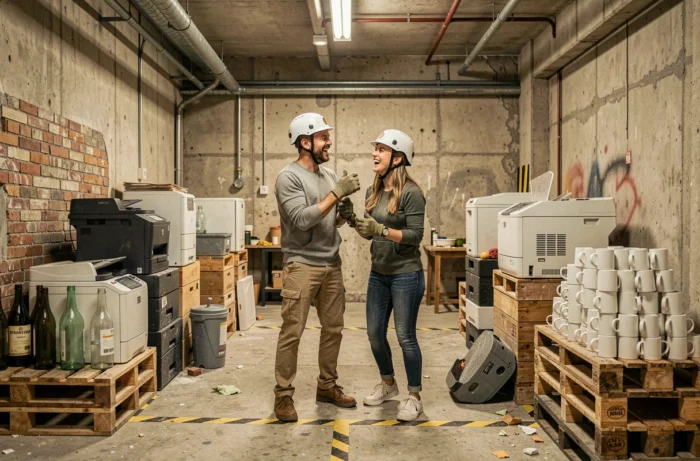
The majority of bookings in rage rooms in Lyon are made in groups. The activity works as an outing with friends, a team-building event, or a bachelor party. However, the solo experience also exists, and the two formats have little in common.
In a group, the dynamic is playful. People film each other, encourage one another, and laugh at each other’s reactions. The goal of stress relief often takes a back seat to collective entertainment. The room becomes a shared playground, and the smashing takes on a social dimension.
Solo, the relationship to the activity changes. Without an audience, the act of destruction becomes more introspective. Several participants who have tried both formats report that the individual session provides a clearer physical release, probably because attention is not dispersed by the group. The choice of music (often provided by the establishment) also takes on a different dimension when alone in the room.
Packages for one person are generally available but are less highlighted on booking sites, which target groups more. If the primary goal is truly to release stress rather than have a festive moment, the solo session deserves consideration.
The fury room in Lyon remains a niche activity whose market continues to structure itself. The criteria that separate a good experience from a disappointing session rely less on price than on concrete elements: quality of ventilation, actual smashing time, variety of objects, and format suited to what one is looking for. Asking these questions before booking helps avoid disappointments.